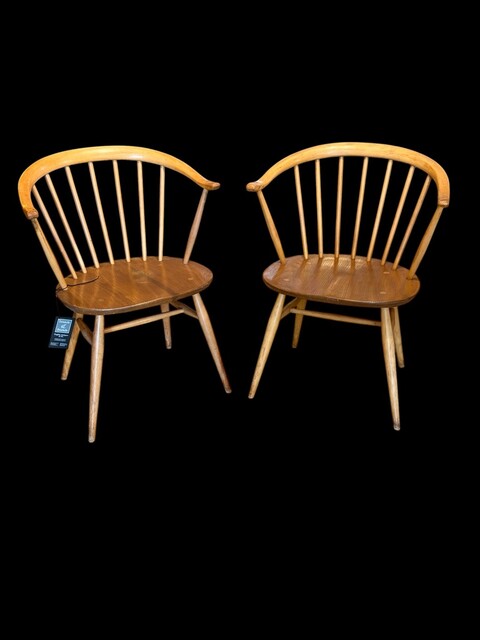
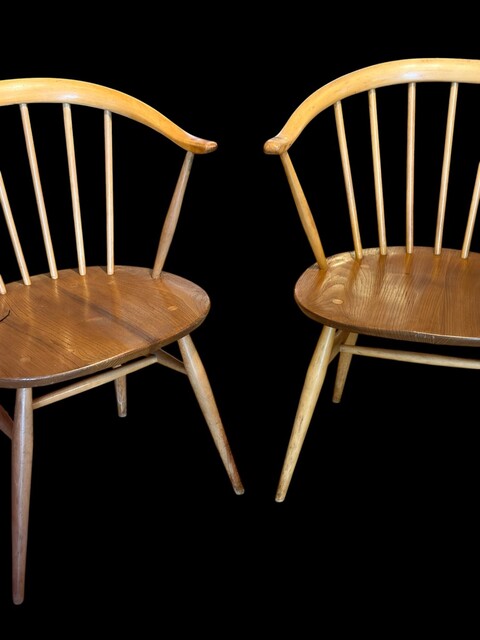
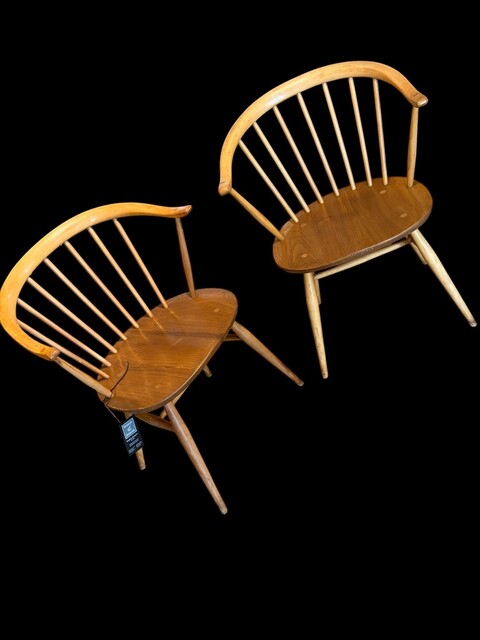
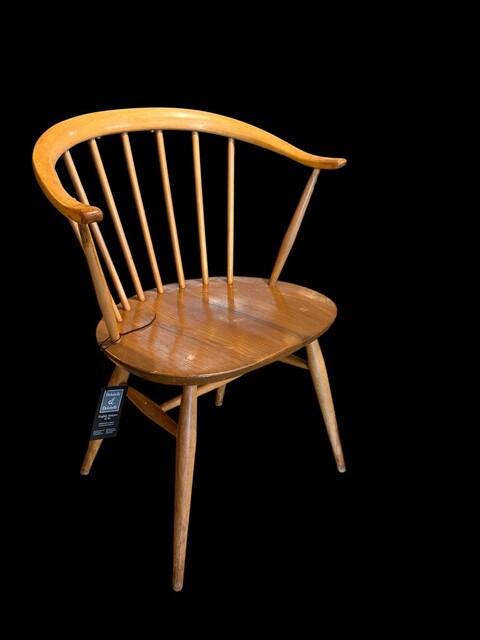
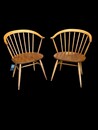
• An English Pair of Mid-Century Ercol Windsor Chairs in Elm and Beech
  • An English Pair of Mid-Century Ercol Windsor Chairs in Elm and Beech
  • An English Pair of Mid-Century Ercol Windsor Chairs in Elm and Beech
  • An English Pair of Mid-Century Ercol Windsor Chairs in Elm and Beech
An English Pair of Mid-Century Ercol Windsor Chairs in Elm and Beech


  A charming pair of original Ercol Windsor chairs, crafted in solid elm and beech during the mid-20th century. The chairs feature Ercol's iconic arched Windsor backs with elegantly tapered spindles, sculpted solid elm seats and distinctive splayed beech legs united by traditional stretchers. The softly curved crest rails and clean, organic lines are characteristic of Lucian Ercolani's timeless design. The contrasting warm elm seats and pale beech frames have developed a beautiful  patina through decades of use.

Request for more information
See more items of this dealer
Print
Delobelle
Address:
Doorniksesteenweg 87 ,
8580 Avelgem
Region: Brugge
Country: Belgium
Tel.: +32 (0)56 644956
E-mail: info@delobelle-antiques.be
Website: www.delobelle-antiques.be
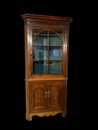
Late 18th century Welsh oak corner cupboard, circa 1780–1800, with astragal glazed upper doors, fielded panel doors and a beautiful  green painted interior.

Late 18th century Welsh oak corner cupboard, circa 1780–1800, with astragal glazed upper doors, fielded panel doors and a beautiful green painted interior.


A fine late 18th century Welsh oak corner cupboard, dating from around 1780–1800. Constructed in two sections, the upper cabinet is fitted with an elegant astragal glazed door featuring a graceful semi-circular arch above six glazed panels. The slender glazing bars create a light architectural appearance while allowing an unobstructed view of the original painted interior.

The interior retains its attractive  green paint, a characteristic finish found on many Welsh country cupboards of the period, providing a striking contrast with the warm oak exterior. Adjustable shelves make the cabinet equally practical for display today.

The lower section is enclosed by a pair of fielded panel doors, each with raised arched panels echoing the glazing pattern above. Beneath, the shaped apron is formed with three shallow arches, a traditional feature frequently encountered in Welsh vernacular furniture. The moulded plinth, together with the canted front corners, gives the cupboard a refined appearance.


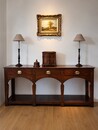
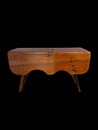
A George III Welsh oak potboard dresser, circa 1770, from Mid Wales, with a triple arched apron, distinctive silhouette legs and a beautiful original patina.

A George III Welsh oak potboard dresser, circa 1770, from Mid Wales, with a triple arched apron, distinctive silhouette legs and a beautiful original patina.


A George III Welsh oak potboard dresser, dating from around 1770 and originating from Mid Wales. Raised on distinctive hand-shaped front supports, carefully cut and carved from solid oak rather than turned, creating an elegant triple arched apron beneath the three frieze drawers.

The characteristic silhouette legs are one of the defining features of this type of Welsh dresser. Cut from solid oak, their shaped profile echoes the outline of a classical baluster, broadening towards the top, tapering above the potboard and terminating in block feet. The rear legs remain plain and square, as is typical of Welsh  furniture. Retaining a generous potboard base and displaying a beautiful deep original patina, 

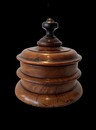
An early 19th century English turned walnut tobacco jar with its original ebony finial and a beautiful rich patina. A fine example of Georgian treen.

An early 19th century English turned walnut tobacco jar with its original ebony finial and a beautiful rich patina. A fine example of Georgian treen.

An early 19th century English turned walnut tobacco jar, retaining its original lid with an ebony finial. Elegantly proportioned and crafted from solid walnut, it displays the restrained lines characteristic of the late Georgian period. The wood has acquired a rich, warm patina through nearly two centuries of careful use, enhancing the natural beauty of the walnut. 

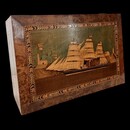
A Victorian English Trinity House Box in burr walnut with maritime marquetry, geometric parquetry borders and a fitted interior, dating from the mid 19th century.

A Victorian English Trinity House Box in burr walnut with maritime marquetry, geometric parquetry borders and a fitted interior, dating from the mid 19th century.

Historical Background

Trinity House, officially The Corporation of Trinity House of Deptford Strond, was founded by Royal Charter in 1514 by King Henry VIII. For more than five centuries it has been responsible for the safety of navigation around the coasts of England and Wales, maintaining lighthouses, lightships, buoys and navigational marks. Its headquarters have been located at Tower Hill, London, since the late 18th century, overlooking the River Thames and the Tower of London.

Modern research indicates that the finest Trinity House Boxes were not produced  by highly skilled cabinet makers and specialist woodworkers in important maritime centres such as Great Yarmouth, Bristol and London. These boxes were made for sale to sea captains, shipowners, merchants and senior officials connected with Trinity House, serving as prestigious presentation boxes, document boxes or personal keepsakes.

Their distinctive decoration reflects Britain's maritime heritage. The lids are typically inlaid with finely executed sailing ships, often representing merchant vessels or naval frigates, accompanied by lighthouses, harbour buildings and coastal fortifications associated with the work of Trinity House. The surrounding geometric borders, composed of intricate chevron, herringbone and parquetry patterns in contrasting timbers such as holly, mahogany, ebony and walnut, are among the defining characteristics of these remarkable boxes.

Produced mainly between 1840 and 1880, Trinity House Boxes represent some of the finest examples of Victorian English decorative woodwork, combining exceptional cabinet making with the rich maritime history of nineteenth century Britain.


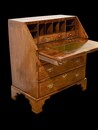
An English 18th Century English Burr Walnut Bureau.

An English 18th Century English Burr Walnut Bureau.

An 18th Century English burr walnut bureau with herringbone banding and feather-banded borders throughout.

The fall front opens to reveal a beautifully fitted interior with a central arrangement of pigeonholes, small burr walnut drawers and shaped document compartments, centred around a green gilt-tooled leather writing surface. The bureau retains its original pull-out writing supports.

The exterior is fitted with two short and two long graduated drawers with finely cast brass swan-neck handles and matching escutcheons. Raised on shaped bracket feet, the bureau displays exceptional burr walnut figuring across the fall front, drawer fronts and writing interior, creating remarkable depth and movement in the grain.

A fine example of 18th-century English cabinet making, admired for its elegant proportions, beautifully figured burr walnut, original fitted interior and rich, warm patina.


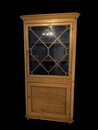
A 19th Century English Pine Corner Cabinet with Astragal Glazed Door.

A 19th Century English Pine Corner Cabinet with Astragal Glazed Door.

A 19th Century English pine corner cabinet with a moulded cornice, retaining its original finish and warm natural patina.

The upper section is enclosed by an astragal glazed door fitted with original old glass, the delicate glazing bars forming an elegant geometric pattern. The lower section features a panelled cupboard door providing enclosed storage. Designed to fit neatly into the corner of a room, the cabinet makes efficient use of space while maintaining balanced proportions.

The simplicity of the mouldings, the aged pine, and the attractive astragal glazing give this cabinet the understated character typical of quality 19th-century English country furniture. A practical and decorative corner cabinet with excellent colour and patina.

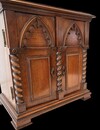
An English 19th Century Walnut Neo-Gothic Apprentice Piece Cabinet.

An English 19th Century Walnut Neo-Gothic Apprentice Piece Cabinet.

An English 19th Century walnut apprentice piece cabinet in the Neo-Gothic style.

The façade is centred by a pair of panelled doors beneath finely carved Gothic arches with quatrefoil tracery, framed by three turned barley twist columns. The moulded plinth and projecting cornice reinforce the architectural character of the cabinet, while the interior is fitted with three  drawers retaining their original brass swan-neck handles.

A finely executed cabinet-maker's apprentice piece, displaying precise proportions, crisp carving and excellent craftsmanship. The walnut has acquired a rich, warm colour and an attractive natural patina over time. The restrained Neo-Gothic detailing reflects the Gothic Revival movement that became increasingly popular in England during the 19th century.


An 18th Century Miniature Mahogany Stool. Grey Island.

An 18th Century Miniature Mahogany Stool. Grey Island.

An unusual 18th-century miniature stool in solid mahogany. Grey Island.

A  rectangular form with shaped sides, a pierced carrying handle to the top and four splayed legs. The stool retains a rich original colour and an exceptional untouched patina, with wear entirely consistent with its age.

A rare example of small-scale 18th-century English vernacular furniture. 


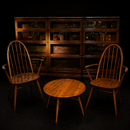
An English Mid-Century Ercol Set with Pair of Armchairs, Coffee Table and Globe Wernicke Bookcases

An English Mid-Century Ercol Set with Pair of Armchairs, Coffee Table and Globe Wernicke Bookcases

An English mid-century Ercol set comprising a pair of armchairs and the original circular coffee table, displayed with a set of Globe Wernicke waterfall bookcases.

The armchairs and coffee table are manufactured in solid elm and beech, retaining the characteristic Ercol design with high Windsor backs, sculpted seats and tapering legs. The Globe Wernicke bookcases are manufactured in oak and comprise glazed sectional units, retaining their original metal fittings and cupboard bases.


An English Pair of Mid-Century Ercol Windsor Chairs in Elm and Beech

An English Pair of Mid-Century Ercol Windsor Chairs in Elm and Beech


A charming pair of original Ercol Windsor chairs, crafted in solid elm and beech during the mid-20th century.

The chairs feature Ercol's iconic arched Windsor backs with elegantly tapered spindles, sculpted solid elm seats and distinctive splayed beech legs united by traditional stretchers. The softly curved crest rails and clean, organic lines are characteristic of Lucian Ercolani's timeless design.

The contrasting warm elm seats and pale beech frames have developed a beautiful  patina through decades of use.

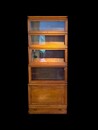
A 19th Century English Waterfall Globe Wernicke Oak Bookcase with Cupboard Base

A 19th Century English Waterfall Globe Wernicke Oak Bookcase with Cupboard Base

A 19th century English Waterfall Globe Wernicke oak bookcase, comprising four glazed sectional bookcase units above a panelled cupboard base with a single drawer.

Each section retains its original up-and-over glazed door with the characteristic Globe Wernicke metal side straps and fittings, allowing the sections to be stacked or removed as required. The cupboard base provides additional enclosed storage.

The oak has acquired a warm, rich colour with an excellent original patina.


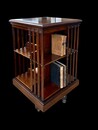
A 19th Century English Mahogany Revolving Bookcase with Satinwood Crossbanded Top

A 19th Century English Mahogany Revolving Bookcase with Satinwood Crossbanded Top

A 19th century English mahogany revolving bookcase, raised on a cast iron revolving base for excellent stability.

The bookcase features open shelving on all four sides, enclosed by finely proportioned vertical slats with brass fittings. The top is beautifully finished with a satinwood crossbanded border.